No one can have mastered several different arts particularly if they are less than fifty years of age; it takes too much time. Each style has its own logic and mechanics for the way it fights. It has developed over centuries to be what it is today. This is why we have a thing called the trades in this country like carpenters, plumbers and electricians because generally one person can’t do it all. They apprentice for years in their craft before they get their license. A lot of these many ‘degreed’ martial teachers have simply taken a few seminars or learned a few forms and thus think they have mastered a style. This is like learning a poem in French and claiming to be able to speak French. You can’t, you can only recite it. Have you ever walked into a group of foreign speaking people and said ‘hi’ to them in their language because that’s all you knew? Once in a Chinese establishment I walked in and said, “Ni hao, ni chitean le ma?” Which means “hi, have you eaten yet”? With that the manager got all excited and yelled out in Mandarin and I was surrounded by about eight Chinese all talking to me at once. They were so happy I could speak Mandarin. I can’t. I know phrases but that’s it. It took several minutes for me to convince them that this gwei lo does not speak Mandarin. So it is with many of those who claim to have mastered many styles. They may have a cursory introduction and a certificate but the true mechanics of the system, as it was intended, are lost to them.
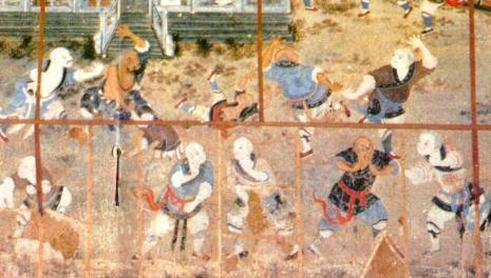
Since a beginner does not have experience they cannot discern between good teachers and bad. It is a daunting task. Of the good teachers I have known they have had one trait in common and that is they promote the art and not themselves. Though they may have a long and storied career they talk about the art and not their accolades. They are trying to communicate the rewards they got from their art and want their students to experience it in a similar fashion. Think of a great musician who wants to communicate the joy that music brings them instead of bragging about the concerts they’ve played. These other teachers promote themselves, what they have accomplished, how many belts they have and how great and honored they are. They generally have a slew of different certificates on their wall. Here it is about self promotion and not the art’s promotion. Did you know you can enroll online and get a doctorate of martial arts from some bogus university? It’s true. You can buy just about any belt or certificate and there are plenty of weekend seminars that will take your money in exchange for them. I know of many teachers that brag about getting their black sash in kung fu. I clearly remember when I got mine; it was the first day of class. My sifu explained that the black sash signified ignorance.
Beware of teacher’s claims and timelines. In one school I was in years ago the teacher was twenty nine years old. Besides listing himself as the master of several styles he also claimed to be ex-military and to have been involved in the Olympics. There were dozens of newspaper articles he had on his wall involving interviews with him and his school. He opened the school when he was twenty one years old. When I did the math he would have had to be in the military when he was twelve years old to accomplish what he said and in the Olympics at eight. Without mentioning these things I politely asked him for a timeline; he refused to talk to me. When you look at a teacher do the math, it pays off. Check into his lineage and see if what he says is legitimate. You want to know what medical school your doctor went to and if it’s legitimate don’t you? He should have peers in the art that respect him. He should also have students that have been with him a long time. I have found that most of the senior students of the self promoting teachers generally catch on to their nonsense and leave them. Again, think about if you met someone in any other discipline who made so many claims would you believe them? “First I was in the Army Rangers, then I studied with the Seals for a while and then with the Israeli military…..” you get the gist of this.
I have something I call the dinner rule. Simply put; is this someone I would invite to my house for dinner and would I be comfortable with them around my family? If you met someone at a business meeting and they bragged about all of their accomplishments and how they crush their opponents would you be likely to invite them for dinner? On the other hand if the person was amiable, open, at ease and comfortable with their self would you invite them for dinner? I think the answer is self evident.
I always suggest that one of the best books you can read about learning kung fu is “The Sword Polisher’s Record” by Adam Hsu. He is quite clear in separating the nonsense from the hype and self promotion.
So when you see a school with one teacher listing five styles of Chinese gung fu, karate, grappling and MMA beware; they are most likely a jack of all trades and master of none.
Nice blog, per usual. There’s a good book in you, JM.
“Since a beginner does not have experience they cannot discern between good teachers and bad. It is a daunting task.”
A daunting task indeed, perhaps even an initiation when venturing into the martial world. Starting my martial arts journey, I picked a teacher who was very strict and very demanding. I liked that about the class. I remembered for the longest time, before stepping through those doors, feeling wretched with anxiousness and nervousness.
Even so, it turned out that the school wasn’t the best fit for me—not because of the discipline involved—but because of the lack of applicable function attained in five years of study and because of the emphasis on “levels,” “belts,” “certifications,” “seminars,” various “dues” and premium prices for “secrets of the style.”
Sure my basics were “good” (heavy finger quotations here) and in a controlled environment my skills appeared impressive. But a lot of the time in these classes were spent conditioning and when it wasn’t, a lot of it was going through static drills. And this is well and good. But if asked to apply anything I learned under random pressure outside of class, I easily folded, even if I was taught to bolster my excuses so they wouldn’t bend quite as easily. This was not an indication of “gung fu.” And so I left.
It’s easy for me to look back now and dismiss this school. But in reality, I think I learned a lot from it. For one, while isolation drills may not bring the best results when applied to random learning and exercises, I find that a lot of training today lacks focus on “grooving” or refining subtle technique. And while an emphasis on conditioning can lead to a detrimental neglect towards technique, NO physical conditioning will leave a poor engine with which to power your “vehicle.” But both of these points fail to accentuate what I really learned: to know how great you have it, you must have a frame of reference with which to compare.
For those of us who have great teachers, it may be easy to forget how lucky we are. The family atmosphere may shelter us from the discipline required to learn our art. And the comfortability in our peers may separate us from the critical eye we need to achieve higher understanding of the art. In many ways, I think we need to know what is bad out there in order to know how to judge what is good. And I think this blog post is a great place to start. As noted in the blog, Adam Hsu’s book is also a great resource where I gleaned insight on this topic. And having a great teacher who encouraged you to explore and make the judgement on your own was great too.
You see, great teachers aren’t afraid of you looking out into the world, because they are secure with their practice and their art. They know that through their actions and through the art, the quality will speak for itself.
As for us students, well, it’s not just the teacher’s responsibility to teach, is it? We also have an obligation and responsibility to actively and accurately learn this stuff.
This is very good advice. Like Phil I went through a situation where I thought I was getting something amazing and the guy was as you put it “jack of all trades” but in the end I was left standing there scratching my head with emptied pockets. I have come to understand that a belt is simply something that holds up your pants nothing more. Now if i see someone who can apply and understand their art whatever that my be that is a true testament. I feel sometimes we have to go to those crappy places to be able to find the diamond in the rough.